HTC Sensation Contract An Impeccable Gadget With Multi Applications

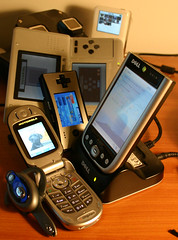
If smart, sleek and sophisticated electronic device catches your attention then purchasing HTC Sensation electronic gadget would definitely be suitable for you. This electronic stuff has been nicely planned with various magical features such as wi fi, internet browser, music player, fm radio, bluetooth connectivity, usb port, camera with an access of video, gaming consoles among others. All these multi traits make this electronic device an all purpose gismo. If you are a click away to your required portal then it would surely strike your mind.

Along with these multi functional elements, the packaging of HTC Sensation Contract deal raises the standard of this electronic handset. This deal system has been prolifically designed with amazing characters such as free talk time, free e-mails, free or half rental plans, free mms and sms along with instant cash back offers. Your pocket gets a required support to have this marvelous electronic gismo in a minimal cost. Apart from these beneficial characters, users are thoroughly allured with the arrangement of vivid luscious gift products such as home theatre system, tv, laptop, lcd, i-pod, camcorder, mp3 player among others. All these profitable and attractive plans surely conquer the heart of consumers and that is why the baggage of HTC contract Deals is always considered by them.

Under the system of HTC Sensation Deals various leading and credible service providers have tied themselves along with their wide range of tariff plans. So, its always appealing for the users as they are bound to the quality and interrupted network of their own choice. Brand names such as vodafone, virgin, orange, o2, 3mobile, t-mobile among others have been aligned up under this magnificent package. This system is carried with an obligation which stops the users to change their ongoing tariff plan till the end of its expiry. Common users avail the right of choosing the most convenient option of tenure among 12, 20, 24 or 36 months. The arrangement of paying the utility bills under this deal package is based on post paid method.

Posted in Uncategorized

Investing in India – An Option Leading to Greener Pasture

Indian Industrial Sector:

The industrial sector of India is responsible for 28% of the country’s GDP and generates employment opportunities for about 14% of the overall working population. The country has witnessed immense growth in this sector since the 1990s, the period known as the post liberalization era. The major changes in the industrial segment were introduced by the Narasimha Rao Government. The period saw the end of the License Raj, tariffs and interest rates were reduced as well as in many divisions foreign direct investments were automatically allowed, while it comes to investing in India.

Industries in India:

Fast Moving Consumer Goods (FMCG) Industry in India:
The FMCG division is one of the most promising industrial sectors of the Indian market. It is ranked among the top five industrial sectors of the country. The major market players in this segment are namely Hindustan Unilever, Godrej, Colgate-Palmolive, ITC, Procter and Gamble, L’Oreal etc.

Wireless Communication Industry in India:
Wireless Communication Industry in the country is emerging as one of the major sectors. Essar Group, Nokia, Beetle, British Physical Laboratories (BPL), Telepoint Services India Pvt. Ltd are some of the wireless device making companies operating in India. BSNL, MTNL, Tata Communications, Reliance, Idea Cellular etc are some of the service providers in the wireless segment in India.

Cottage Industry in India:
The Cottage Industry or otherwise known as the Small Scale Industries have been the backbone of the rural Indian economy. Khadi, leather, silk, cotton, wool, jewlry, ornaments, gems and many other items are produced by these industries. The biggest plus point is these cottage industries in India generate huge employment potential as they require ample manpower.

Indian Software Industry:
Since the last two decades, India has witnessed a booming growth in this sector. India is gradually becoming the hub in this field. Bangalore the capital city of the southern Indian state Karnataka is known as the Silicon Valley of India.

Indian Biotechnology Industry:
This sector has posted impressive growth over the last few years. BioPharma, BioAgriculture, Bioinformatics, etc are some of the subdivisions of the Indian Biotechnology Industry. Biocon is the country’s first Biotechnology Company set up in 1978 in Bangalore, Karnataka.

Indian retail industry:

Setting up of stores of international renowned brands, super markets, shopping malls, departmental stores etc changed the outlook of the Indian retail industry. Some of the major players in the Indian retail arena are Big Bazaar, Pantaloons, Bata, Barista, Cafe Coffee Day, Khadims, and Landmark etc. The retail division is expected to generate more than 10-15 million jobs in the next few years.

Foreign Direct Investment in India:
India has come out as one of the top destinations when it comes to industrial investment. The due credit is given to its liberalized economic policies where FDI up to 100% is allowed in many industrial sectors of the country. The Government has also initiated several measures to facilitate industrial licensing and thus make investing in India easier.

The liberal FDI policies and friendly industrial licensing measures formulated by the Government have made India as a major destination for setting up industries in as many sectors as possible. All thanks to the Government of India which has made investing in India as an attractive option and thus strengthen its economy with such steps.

Posted in Uncategorized

Software Development Utilities & Enhancement

Software development allows for the creation of applications for a certain software package, software framework, hardware platform, computer system, video game console, operating system, or similar platform.
A software engineer typically receives the SDK from the target system developer.
software development solutions, enables for tremendous productivity and capability. We have some or other business utility solutions for all.

  • Utilities :-

software solutions utilities are committed to total customer care by providing customers with innovative concepts, designs, implementation, and enhancements. software development utilities address the needs of our customers with its unique and advanced features. We are planning to expand our development network to get enrolled new people with brilliant new ideas and innovative thinking.
Development of customized software are specialized in creation of software projects that solve science-intensive and complex algorithmic tasks in an optimal way. We have top class software development professionals like project managers, software engineers and programmers, testers, designers and technical writers with exclusive skill sets for this.

  • Software Development utilities for maintenance:-

The Software Development Utilities offer you a number of tools to help in the production of modifications or applications, the auditing and testing of your code, and the production of distribution media. These utilities are installed through Resource Manager like any other application.

  • Software Development Utilities Menus-

1.System File Maintenance
2.Use the functions on the Software Audit
3. Replacement Programs
4. System File Conversion
5. Data Dictionary

  • Software Development:-

Software development also known as application development, software design, designing software, software application development, enterprise application development, or platform development. herefore, software development may include research, new development, prototyping, modification, reuse, re-engineering, maintenance, or any other activities that result in software products

  • Software Development Enhancement:-

Our dedicated Software product development team brings together decades of experience working on many Software Product enhancements addressing diverse needs. While they keep themselves ahead of technology, they consult on market demands, business dynamics, user needs and make practical investigations which enable them to advise the client on future predictions so they can incorporate features that are far in advance of their competitors.
Most of the times Software companies are stretched with development commitments and welcome the opportunity to bend with competent outside resources. Mechsoft is good in becoming the virtual development organization for our software partners with a strong focus on customer requirements. Depending on the specific end customer, we can execute field-engineered product enhancements onsite, at our partner’s location or offsite which include core features, integration with other products, key performance indicators, report development, and platform porting and testing.

  • SOFTWARE ENHANCEMENT SERVICE CAN FULFILL REQUIREMENTS:
  • Software Product performance
  • Usability engineering
  • Interoperability
  • Minor software product enhancement through new feature
  • Major software product enhancement with multi features
  • Migration to new platform
Posted in Uncategorized

Premium Reusable LCD Screen Protector with Lint Cleaning Cloth for Apple Macbook, Macbook Air Laptop 13.3-Inch Widescreen LCD

  • Brand Non-oem accessories.Suggested Applications:13.3″ Widescreen [16:10] LCD screens / Apple® MacBook® / MacBook Air®
  • Screen size: 13.3 Wide inch. Clear, ultra thin and durable.
  • Cover entire LCD screen of your Laptop. Shield and protect your screen from unwanted scratches.
  • Perfect accessory to guard against screen scratches
  • Include a cloth, soft card & one screen protector. Laptop not included.

Product Description
Premium Reusable LCD Screen Protector with Lint Cleaning Cloth for Apple Macbook, Macbook Air Laptop 13.3-Inch Widescreen LCD… More >>

Premium Reusable LCD Screen Protector with Lint Cleaning Cloth for Apple Macbook, Macbook Air Laptop 13.3-Inch Widescreen LCD

Posted in Uncategorized

Clean Room Technology Then and Now

The principle of Clean room design starts from almost 150 years ago when these units were used for bacterial control in hospitals. Today, clean rooms have completed a long way and developed to the modern technology. In earlier day, these clean rooms were designed for fulfilling the requirement of clean environment for industrial manufacturing during 1950s and the same clean rooms are also used for variety of applications in many industries.

A clean room is defined as a place that provides attentively controlled environment that has a low level of environmental pollutants such as airborne microbes, dust, chemical vapors, and aerosol particles. When the air entered in a clean room it is filtered and then continuously circulated through high efficiency particulate air (HEPA) or ultra-low particulate air (ULPA) filters. These filters are used to remove internally generated contaminants. The persons, who work inside the clean room, wear protective clothing while enter and exit through airlocks, while equipment and furniture inside the clean room is specially designed to produce minimal particles.

Today, more than 30 different industry segments utilize clean rooms including semiconductor and other electronic components, pharmaceutical, and biotechnology industries.

Modern clean rooms were developed during the Second World War to improve the quality and reliability of instrumentation used in manufacturing guns, tanks and aircraft. During this time, HEPA filters were also developed to contain the dangerous radioactive, microbial or chemical contaminants that resulted from experiments into nuclear fission, as well as research into chemical and biological warfare.

On the other hand, clean rooms for manufacturing and military purposes were being developed; the importance of ventilation for contamination control in hospitals was being realized. The use of ventilation in a medical setting gradually became standard practice during this time.

The concept of ‘laminar flow’ was introduced during 1950s and 1960s, when NASA’s space travel program was initiated. This marked a turning point in clean room technology and from this time, the evolution of clean rooms gained momentum.

In the late 1950s, the Sandia Corporation (which later became Sandia National Laboratories) began investigating the excessive contamination levels found in clean rooms. Researchers found that clean rooms were being operated at the upper practical limits of cleanliness levels and identified a need to develop alternative clean room designs.

In 1961, Professor Sir John Charnley and Hugh Howorth, showed a tremendous improvement in unidirectional airflow by creating a downward flow of air from a much smaller area of the ceiling, directly over the operating table.

Also in 1961, the first standard written for clean rooms, known as Technical Manual TO 00-25-203, was published by the United States Air Force. This standard considered clean room design and airborne particle standards, as well as procedures for entry, clothing and cleaning.

In 1962, Patent No. 3158457 for the laminar flow room was issued. It was known as an “ultra clean room.”

By 1965, there have been several vertical down flow rooms were used in which the air flow ranged between 15 m (50 ft)/min and 30 m (100 ft)/min. It was during this time that the specification of 0.46 m/s air velocity and the requirement for 20 air changes an hour became the accepted standard.

By the early 1970s the principle of “laminar flow” had been translated from the laboratory to wide application in production and manufacturing processes.

The 1980s saw continued interest in the development of the clean room. By this stage, clean room technology had also become of particular interest to food manufacturers.

In 1987, a patent was filed for a system of partitioning the clean room to allow zones of particularly high-level cleanliness. This improved the efficiency of individual clean rooms by allowing areas to adopt different degrees of cleanliness according to the location and need.

In 1991, a patent was filed for a helmet system that can be used in a medical clean room in which the user is protected from contaminated air in the environment, while the patient is protected from contaminated air being exhausted from the user’s helmet. Such a device decreases the possibility of operating room personnel being contaminated with viruses carried by the patients being operated upon.

The pace of clean room technology transformation has accelerated over recent years. Since the year 2000, there have been significant advances in new clean room technology, which have helped to streamline manufacturing and research processes, while also reducing the risk of contamination. Most of the technological developments of the past decade have been directed towards the manufacture of sterile products, particularly aseptically filled products.

In 2003, Eli Lilly pioneered the development of a new system for the prevention and containment of cross contamination during the manufacture of pharmaceutical powders using a specially designed “fog cart”. This allows the operator to be covered by an exceptionally fine fog of water on exit from a critical area, virtually eliminating the risk of transferring dust traces beyond their proper confines.

The Future of Clean Rooms

Today, clean rooms are used in variety of applications. The presence of these units can be seen in the manufacturing of semiconductor and other electronic components, as well as in the pharmaceutical and biotechnology industries. Furthermore clean room technology has more recently been applied to micro- and Nano-system processes, and this looks certain to be an area of growth in coming years. The development of clean room technology is likely to continue to be driven by certain key factors including the increasingly technical use of exotic physical and biological phenomena, the central role of increasingly fine structures, the creation and use of materials of the highest purity, and the increasingly broad-based utilization of biotechnology. Given the scale of these challenges, clean room technology looks set to remain indispensable to production in coming years.
Posted in Uncategorized