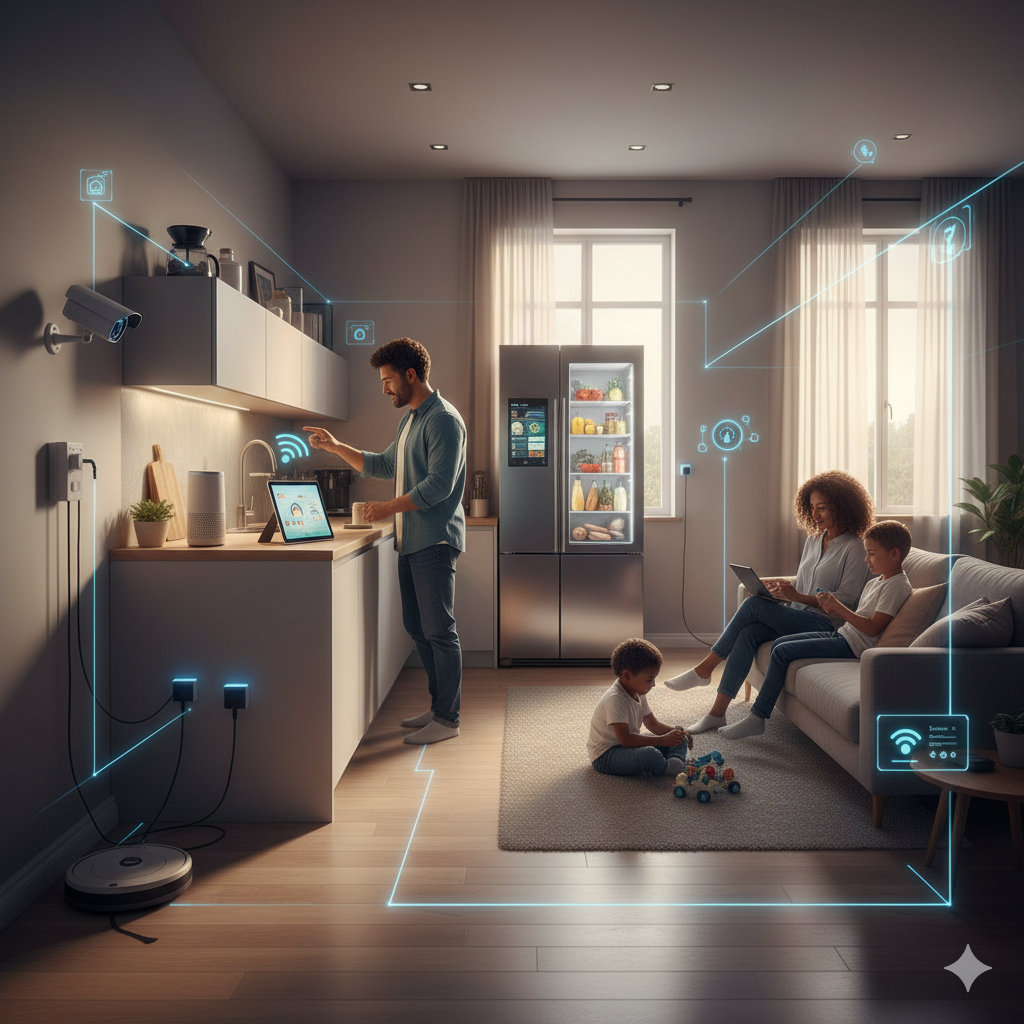
Understanding the Internet of Things (IoT): Smart Devices in Our Daily Lives
The Internet of Things (IoT) refers to everyday objects that are connected to the internet and can send or receive data. These devices are called “smart” devices because they can work automatically, communicate with each other, and make our lives easier.
In simple terms, IoT allows ordinary devices to connect, share information, and respond without human intervention.
What Are Smart Home Devices?
Smart home devices are one of the most common examples of IoT. These devices are used in our homes and can be controlled through smartphones or voice assistants.
Examples include:
Smart lights that turn on or off using an app or voice command
Smart thermostats that adjust room temperature automatically
Smart security cameras and door locks that improve home safety
These devices help save time, increase comfort, and improve energy efficiency.
What Are Wearable Devices?
Wearables are smart devices that people wear on their bodies. They are designed to monitor health, fitness, and daily activities.
Common wearable devices include:
Smartwatches that track steps, heart rate, and sleep
Fitness bands that monitor exercise and calories burned
Wearables collect data and give users helpful insights about their health and lifestyle.
What Are Connected Devices?
Connected devices include any objects that can connect to the internet and communicate with other systems.
Examples include:
Smart refrigerators that track food items
Connected cars that provide navigation and safety features
Smart TVs and speakers that stream content and respond to voice commands
These devices work together to create a more efficient and connected environment.
Why Is IoT Important?
IoT makes everyday life:
More convenient – tasks can be automated
More efficient – energy and time are saved
More informed – users receive real-time data
IoT is not only used in homes but also in healthcare, transportation, agriculture, and cities.
Challenges of IoT
Despite its benefits, IoT also has challenges:
Privacy and data security risks
Dependence on internet connectivity
Compatibility between different devices
These challenges highlight the importance of strong security and responsible use.
Conclusion
The Internet of Things is changing the way we live and interact with technology. From smart homes and wearables to connected devices, IoT is becoming part of everyday life. As technology continues to grow, IoT will play an even bigger role in creating smarter and more connected communities.