A Roadmap to Financial Freedom: Overcoming Credit and Debt Problems

Introduction

In today’s fast-paced world, managing credit and debt has become a complex challenge for many individuals. Balancing financial responsibilities, unexpected expenses, and personal goals can often lead to credit and debt problems. The good news is that with determination, discipline, and strategic planning, it is possible to overcome these challenges and pave the way to a brighter financial future. This article outlines a comprehensive roadmap to help you navigate your credit and debt problems successfully.

  1. Face Your Situation Honestly

The first step toward overcoming credit and debt problems is acknowledging and accepting your current financial situation. It’s crucial to be honest with yourself about the extent of your debts, interest rates, and the reasons behind your financial struggles. Facing the reality of your situation is essential for developing an effective plan to move forward.

  1. Assess Your Finances

Create a detailed inventory of all your debts, including credit cards, loans, and outstanding bills. List their balances, interest rates, minimum payments, and due dates. Simultaneously, compile a comprehensive overview of your income sources and monthly expenses. This assessment will help you gain a clear picture of your financial landscape and inform your strategy.

  1. Craft a Realistic Budget

Designing a budget is a cornerstone of effective financial management. Analyze your monthly income and allocate it to essential expenses such as housing, utilities, groceries, and transportation. Devote a portion of your budget to debt repayment while ensuring you meet your basic needs. Prioritize high-interest debts for accelerated repayment.

  1. Prioritize Debt Repayment Strategies

Two popular strategies for repaying debt are the avalanche method and the snowball method.

  • Avalanche Method: Focus on paying off debts with the highest interest rates first. This approach minimizes overall interest payments over time.
  • Snowball Method: Start by paying off the smallest debts first and then move on to larger ones. This method provides psychological motivation through small victories.
  1. Negotiate with Creditors

If you find yourself struggling to meet minimum payments, communicate with your creditors. Many lenders are willing to negotiate reduced interest rates, lower monthly payments, or even settle for a lump-sum payment. Open dialogue can lead to more manageable terms and ease your financial burden.

  1. Consider Debt Consolidation or Refinancing

Debt consolidation involves merging multiple debts into a single loan with a lower interest rate, streamlining payments. Alternatively, refinancing high-interest loans, such as credit card debt, with a lower-interest option can reduce monthly payments and overall interest expenses.

  1. Seek Professional Assistance

If your credit and debt problems appear insurmountable, consider seeking help from a credit counseling agency or financial advisor. These professionals can provide tailored guidance, offer debt management plans, and help you regain control of your finances.

  1. Practice Responsible Credit Habits

To prevent future credit and debt issues, adopt responsible credit habits:

  • Pay bills on time to avoid late fees and negative marks on your credit report.
  • Keep credit card balances low and aim to pay them in full each month.
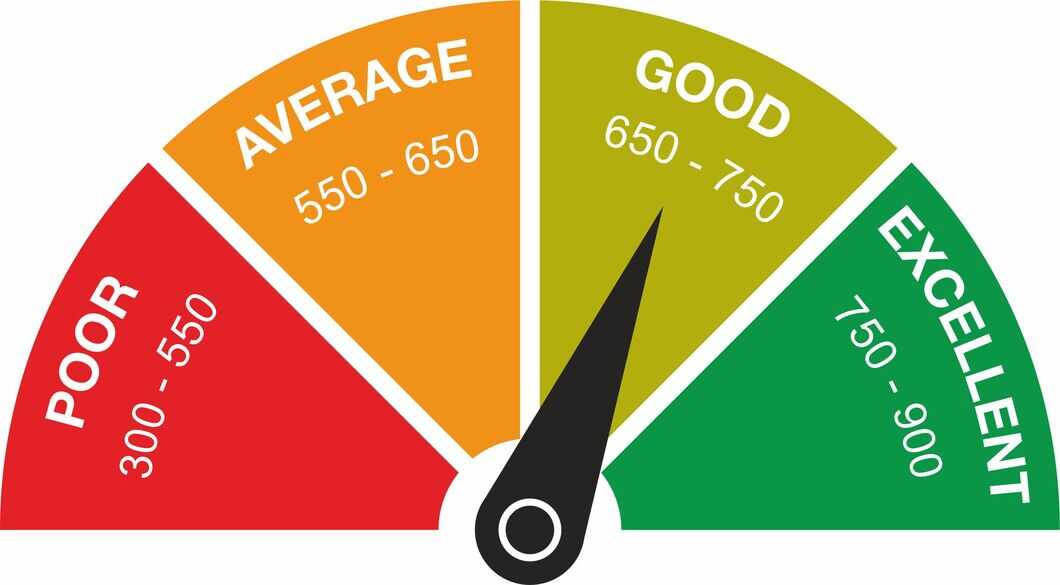
  • Limit new credit applications, as each inquiry affects your credit score.
  • Regularly review your credit report for errors and discrepancies.
  1. Build an Emergency Fund

Creating an emergency fund is essential for financial stability. Strive to save three to six months’ worth of living expenses. This fund acts as a safety net during unexpected events, reducing the need to rely on credit during challenging times.

Conclusion

Overcoming credit and debt problems requires a holistic approach that encompasses self-awareness, strategic planning, and disciplined execution. By honestly assessing your situation, crafting a budget, prioritizing debt repayment, and exploring negotiation options, you can gradually regain control of your financial well-being. Remember, seeking professional guidance is a viable solution for complex situations. With dedication and perseverance, you can conquer credit and debt challenges and set yourself on a path toward lasting financial freedom.

How AI Will Transform the Smart Phones in Coming Years

Artificial intelligence (AI) is altering many facets of our life, including cellphones. In this post, we will look at three ways AI will change the smartphone business in coming years.

Battery Life and Condition

The battery is one of the most crucial components of a smartphone since it dictates how long we can use our gadgets before they need to be recharged. However, due to factors such as temperature, charging cycles, and usage patterns, battery performance might decline over time. Although we cannot alter how we use our smartphones, we can apply AI to improve how smartphones regulate battery and charging! AI can assist increase battery life by anticipating how long it will last, adjusting settings based on user behavior, and minimizing power consumption by intelligently managing background operations. For example, Xiaomi incorporated adaptive charging, and Oppo and OnePlus implemented smart protection in their Super VOOC changing standards. These AI techniques have the potential to increase smartphone battery endurance by up to 30%, enhance long-term battery health by up to 40%, and save customers money on energy expenditures.

The Virtual Assistant

The voice assistant is a useful way to use natural language to interact with our devices. To interpret and respond to human requests, voice assistants employ technologies such as voice recognition, natural language processing (NLP), and artificial intelligence (AI). Voice assistants may do things like make phone calls, send messages, play music, check the weather, create reminders, and more. However, there are several limitations to voice assistants, such as accuracy issues (particularly with accents or background noise), limited functionality (relative to touch-based interactions), and privacy concerns (due to data gathering).

Newer AI technologies, such as OpenAI’s ChatGPT, can improve voice assistants by generating more realistic and engaging responses based on context and personality attributes. Voice assistants may also learn from user feedback, adapt to diverse settings, and give more tailored services with newer AI. Another example is Microsoft Bing’s ChatGPT, which was recently enhanced with a speaking voice and is now available on both Android and iOS, putting it up against Apple’s Siri and Google Assistant.

The Camera on A Smartphone

Another important element of a smartphone that draws many customers is the camera. Smartphone cameras can now deliver spectacular images that rival professional DSLR cameras thanks to AI. AI can improve smartphone cameras by employing scene recognition, which automatically adjusts the settings for the best possible photo based on the subject’s categorization and other parameters such as lighting conditions. AI can also enable object identification, allowing the camera to distinguish between faces and backgrounds and apply effects like bokeh in portrait mode. Furthermore, AI can boost image quality through the use of computational photography techniques such as HDR (high dynamic range), super-resolution, and low-light enhancement.

Vivo’s current flagship Vivo X90 series of smartphones should not be overlooked when it comes to AI-assisted smartphone photography. When compared to its opponent, the Vivo X90’s computational photography is near instant thanks to Vivo’s latest Vivo V2 ISP imaging chipset. However, the improved images are also aided by Vivo’s collaboration with Zeiss, which allowed the company to apply Zeiss’ characteristic T* coating on the flagship Sony IMX sensor onboard the Vivo X90 series.

Finally, AI will change cellphones in a variety of ways in coming years. AI will make future smartphones more powerful, versatile, and user-friendly than ever before by boosting battery life, picture quality, and voice assistant features.

Author’s Bio:

John Adams is a paralegal and technology enthusiast, eager to discuss the latest trends and marketing strategies with dive into technical details. He regularly writes about marketing tactics and strategies and medical malpractice legislations. Sharing personal opinions and experiences makes him very happy, and he is always open to constructive criticism.

Explanation of generative artificial intelligence and its applications in various industries.

The generated AI is an artificial intelligence that can create new content and ideas, including dialogue, stories, pictures, videos, and music. Like all AI, the ML model -driven large models use AI. These models can be used on a large amount of data, which is usually called the basic model (FMS). The latest progress of ML (especially the invention of the neuron network structure based on a transformer) has led to the rise of a model containing billions of parameters or variables. In order to understand the changes in scaling, the biggest model proposed in 2019 is 330 m parameters. Now, the largest model exceeds 500B parameters -only increased by 1,600 times in just a few years. Today’s FMS, such as LLM (Large Language Model) GPT3.5 or Bloom, and text made of stability-AI, the stable diffusion of image models can perform extensive tasks including multiple domains, such Generate pictures, mathematical questions, dialogue and answer questions according to the file. The size and nature of the FMS distinguish them from the conventional ML models that are usually performed at certain tasks, such as B. Text’s emotional analysis, image classification, and predictive trends

At a high level, the generated AI refers to a class of AI models and tools developed for creating new content (such as text, images, videos, music or code). The generated AI uses various technologies-including neuron network and deep learning -rgorithms-to identify mode and generate new results based on them. Organizations and personnel (including software developers and engineers) are increasingly looking for generating Ki tools to create content, code, pictures, etc.

NFC Functions on Smartphones

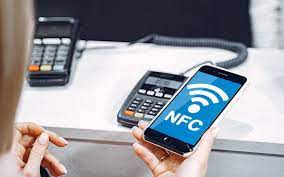
There are many NFC functions on smartphones and iPhones. Because Android phones are now equipped with NFC or Near Field Communication. At first, this feature was only available on middle- and upper-class Android phones. However, as the times have progressed, since 2021, you can get an Android cellphone equipped with NFC at a price of 2 million.

Variety of NFC Functions on Smartphones
Because there are so many NFC functions on cellphones, later this feature will become a standard feature for every new Android cellphone that will be released. So, what are these functions. Check out the following reviews.

Electronic Money Top Up
The first function is to top up and check electronic money balances. The reason is now, electronic money is a means of payment that is used for several purposes. So, when electronic money runs out, you can top up at any time without needing to go to the convenience store or ATM.

Payment Instrument
To use NFC as a means of payment you need to use an Android application that supports payments via NFC. When you are going to pay, you need to scan it by attaching it to the back of the cellphone to the NFC sensor that is in the cash register.

Sharing Videos and Photos
The NFC function on the next smartphone is to send videos and photos wirelessly. For a faster method, simply touch the back of the cell phone against the NFC logo on a device with NFC. The FC feature can make it easier for you to move large videos and photos in a short time.

Scan Information from Smart Poster
Smart Poster is a type of creative media that is widely used by several brands. This media already has an NFC chip in it, so it can display promotional content dynamically. When you attach your smartphone to the NFC chip on the poster, you will be able to see special promo content or web pages from a brand.

Wifi access
The NFC on Android phones can also be used for various WiFi connections. Later WiFi owners can share internet connection with other devices using NFC. The trick is to get closer to the back of the body and scan the NFC chip.

Speaker Connection
Now, mobile speakers are no longer wired. Most of the speakers connected to the HP via Bluetooth. However, there will usually be a lot of problems when connected. Because portable speakers are equipped with NFC. So that it functions to connect the cell phone to the speaker by placing the cell phone on top of the speaker.

Sharing Contacts
Furthermore, the NFC feature also makes it easier for you to share contacts or phone numbers with other devices. For that, you don’t need to write or mention the contact’s name. By using NFC, you can also fill in all the data in the contact.

Data Sharing
The first time Android Beam technology was introduced in Android 4.0. With this technology, devices can share data in proximity. When there are two Android cell phones with NFC close together. Later a notification will appear around the question whether to share content or not.

Access Card Emulation
The NFC function on smartphones then becomes access card emulation. The reason is that access cards can open doors as well as tickets so that users can use the elevator. So that the data on the access card can be transferred to the NFC feature.

check in.
Finally, the NFC function on a smartphone is check-in. Check-in is a basic function that needs to be done when NFC is embedded in a cell phone. The reason is that this check can be useful to notify that someone is at certain coordinates.

Best Virtual Reality Glasses For Smartphone

1.Samsung Gear VR

The first glasses that can be recommended are the Samsung Gear VR. These glasses are among the best glasses that are compatible with smartphones. These glasses are pretty good because they can provide a clear enough visual appearance that can be challenging when used to play games or just to watch movies.

2. Google’s Daydream view

Google Daydream View is one of the products released in 2016. This product is claimed to have a fairly light weight and is compatible with smartphones made by Google, namely the Google Pixel and Pixel XL.

3. HTC Vive

One of the best 3D VR glasses right now that you can choose from is the HTC Vive. These VR glasses are equipped with 70 sensors which of course will work very well when playing games that are supported by 360 degree technology. To keep users from getting dizzy quickly, these glasses are also equipped with a latency level of 90 Hz. HTC Vive VR glasses have the advantage of being able to recognize lighthouses so we don’t have to worry about moving around in the room.

4. Oculus Rift

One of the best virtual reality glasses that is very popular is the Oculus Rift. We can connect this product to a DVI computer and a USB port which can track the user’s head movements very well. These VR glasses also add 3D imagery on the stereo screen. The refresh rate technology on these glasses is almost the same as the HTC Vive, so the quality is pretty good.

5. Sony PlayStation VR

The next best virtual reality glasses that we recommend are the Sony Playstation VR. This product is still quite new like Google Daydream, which was released in 2016. These glasses use a 5 inch LCD screen made from the original prototype. Apart from that, with the latest technology, Sony also offers a 120Hz refresh rate to make Playstation games more real. The technology embedded in these glasses will make the wearer comfortable.

6. LG 360VR

The next best virtual reality glasses are products from LG, namely the LG 360 VR Headset. Not inferior to other brands, LG also launched virtual glasses that can be used for smartphones. The interesting thing that can be seen from this product is that you don’t need to put your glasses close to a damaged cellphone, namely the smartphone that you have will be connected to these glasses with USB-C.

7. Microsoft Hololens

The other best VR glasses that you can choose are at Microsoft Hololens. The design of these glasses is quite different from other VR causes in that they incorporate a more modern virtual reality. This device also combines elements of the real world and virtual world very well.
8.Huawei VR

The best VR glasses for smartphones that can be recommended are Huawei VR headsets. These virtual reality glasses will work very well including with Daydream which is a platform from Google. If you already have a Huawei P10, this headset is perfect for you.
9. Sulon Q

Sulon Q is rumored to be one of the toughest competitors for the HTC Vive and Oculus Rift. One of the advantages of these best virtual reality glasses is that they can be used even if your PC specs are low. You can also use these VR glasses when using augmented reality applications or playing games. The price for Sulon Q itself has not been determined even though this vr headset has been released since 2016.
10. Google Cardboard V2

Google Cardboard is one of the cheapest VR glasses and has been released for a long time so that there are a lot of users. These glasses use a gyroscopic sensor which is expected in an accurate positioning system. Because of this, this product can track your head movements very accurately.